Once a month, about 25 people sit around a table in a borrowed room in Berlin. One guest talks for about 30 minutes, then everyone discusses it over dinner. It's free to come.
We don't have a stage, a projector or a budget. What we do have is a long table in a borrowed room, one guest who knows their subject, and about 25 people who pay for their own dinner. That's the whole setup, and it works better than a lecture hall would.
The guest talks for about 30 minutes, then we open it up. For about an hour the whole table discusses what was said, and everyone's view counts the same — the guest included. The moderator keeps the conversation fair and makes sure the quieter people at the table get a turn too.
You eat while all this happens — it's a dinner table, after all. People tend to listen more and make fewer speeches over food. The moderated part ends around 21:30, and you can stay and keep talking for as long as the restaurant is open.
Around 1800, some of the best conversations in Berlin happened in private rooms, hosted by two women who had no institution behind them. Rahel Levin Varnhagen brought her guests up to an attic room in her parents' house on Jägerstraße and mostly just served tea. Henriette Herz held her salon while her husband Markus gave physics lectures to a separate group in the next room. Princes, philosophers and bankers' daughters all sat at the same table because there was nowhere else in the city they could.
Neither of them had money, a stage or any official backing. They had a room, a good eye for who would be interesting together, and the nerve to sit a Prussian officer next to a poet and see how it went. The basic idea — mixed company around one table, with the conversation as the whole event — still works, so we haven't changed it.
We're not trying to recreate any of that, and nothing about the evenings is nostalgic. It's just that Berlin today has the same conditions those two were working with: lots of interesting people, expensive rooms, and few places where strangers genuinely mix. So we do what they did and put people around a table.
Once the talk ends, the guest is just another person at the table. A good point counts the same whoever makes it.
We don't record, film or stream anything, so people feel free to say what they actually think.
Disagree with what someone said as much as you like — just don't make it about the person.
Coming is free, and every guest pays their own bill. That way the salon doesn't owe anything to anyone.
We say in advance which language each talk will be in. The discussion moves between German and English, and the moderator translates whenever someone needs it.
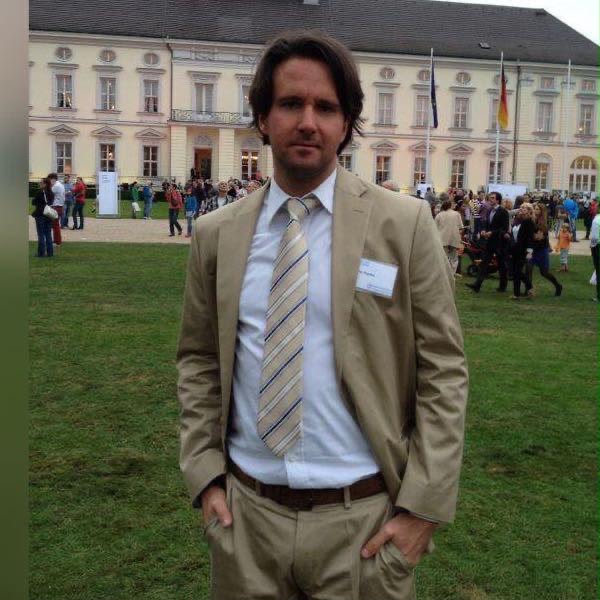
Fabian Pianka runs the salon. He finds the guests, borrows the rooms, moderates the discussion and answers every email himself. He started it because he wanted an evening like this to exist in Berlin, and it didn't.
His day job is moderating and facilitating in intercultural settings — meetings where people with different languages and different assumptions have to reach a decision together. The salon uses the same skills, once a month, for free.
Here's what I'm asking for: one evening a month, on a fixed weeknight, from 19:00 to about 22:00, for roughly 25 guests around one table. I don't want to rent your room. Instead, I guarantee a minimum spend on food and drink for the evening. Every guest orders and pays individually, and if the table comes in under the agreed figure, I pay the difference myself. What you get is a full room on a quiet weeknight, a booking that repeats every month, and guests who often come back on their own. If you have a room that seats 25 at one table, I'd like to hear from you.
fabian@thesalonberlin.de · +49 175 1087592 · one person reads and answers